.png)

Pathway Lighting in Montreal: Different Lighting Strategies For Different Montreal Neighborhoods

Pathway lighting is one of the most important elements of an exterior lighting plan in Montreal. Beyond aesthetics, it directly affects safety, accessibility, property value, and the experience of outdoor spaces year-round. What many homeowners and property managers do not realize is that pathway lighting design should vary significantly depending on the neighborhood’s terrain, density, and architectural context.
In Montreal, lighting strategies that work beautifully in Westmount or Outremont do not necessarily translate to Hampstead, Town of Mount Royal (TMR), the West Island, or high-density areas like Downtown Montreal, the Plateau, or Old Montreal.
How does pathway lighting design change across these environments, and what does Nuage Lighting consider when designing systems that improve safety and add a visually appealing style?
Pathway Lighting on Sloped Terrain: Westmount and Outremont
Westmount and Outremont present some of the most technically demanding pathway lighting conditions in Montreal. Both neighborhoods sit along or near the slopes of Mount Royal, with properties featuring elevation changes, staircases, switchback walkways, and retaining walls.
Key Challenges in Sloped Neighborhoods
- Uneven grades increase the risk of trips and falls, especially during winter freeze-thaw cycles.
- Snow accumulation and ice buildup can obscure poorly placed fixtures.
- Improper beam angles can create glare, reducing visibility rather than improving it.
Best Practices for Sloped Pathway Lighting in Outremont and Westmount
In neighborhoods like Westmount and Outremont, pathway lighting must be layered and precisely aimed. Nuage Lighting typically specifies:
- Low-glare, shielded path lights to control beam spread
- Step lights integrated into risers, stone walls, or retaining structures
- Tighter fixture spacing to maintain consistent illumination across grade changes
- Warm color temperatures that enhance stone, brick, and mature landscaping without harsh contrast
Fixtures must be carefully positioned to illuminate walking surfaces, not eye level. In sloped areas, downward-directed optics and precise cutoff angles are critical. This approach improves safety while maintaining the understated elegance expected in these historic neighborhoods.
For homeowners considering a full exterior lighting plan, pathway lighting is often integrated with broader landscape lighting strategies to maintain visual continuity. We would highly recommend reading our blog on tips for lighting options within the Westmount and Outremont areas.
Pathway Lighting in Flat Residential Areas: Hampstead, TMR, and the West Island
Hampstead, Town of Mount Royal, and much of the West Island feature flatter terrain, wider lots, and more predictable pedestrian pathways. While these areas are less technically complex than Mount Royal slopes, they present their own design considerations.
Characteristics of Flatter Montreal Neighborhoods
- Longer, straighter walkways from the street to the entrance
- Wider driveways and side-yard paths
- More open lawns with fewer elevation changes
Lighting Design Approach for Flat Landscapes
In flatter areas, pathway lighting focuses on rhythm, spacing, and curb appeal rather than hazard mitigation. Nuage Lighting often recommends:
- Evenly spaced path lights that create a welcoming approach to the home
- Broader beam distributions to reduce fixture count while maintaining uniformity
- Coordinated fixture styles that align with architectural lines and landscaping
Because there are fewer elevation changes, fixture spacing can be wider without sacrificing safety. However, careful attention is still paid to glare control, especially near driveways and sidewalks, where light spill can affect neighboring properties.
In suburban areas like the West Island, pathway lighting is frequently combined with driveway lighting and entry lighting to create a cohesive exterior experience.
Pathway Lighting in High-Density Neighborhoods: Downtown, Plateau, and Old Montreal
High-density areas such as Downtown Montreal, the Plateau, and Old Montreal require a fundamentally different approach to pathway lighting. Space constraints, shared walkways, mixed-use properties, and municipal regulations all influence design decisions.
Unique Challenges in Dense Montreal Neighborhoods
- Limited installation space and underground utilities
- Proximity to neighboring buildings and public sidewalks
- Higher pedestrian traffic and visibility requirements
- Strict glare and light trespass considerations
Urban Pathway Lighting Solutions
In dense neighborhoods, pathway lighting often shifts from traditional path lights to architectural and integrated solutions, such as:
- Recessed step lights in staircases and raised walkways
- Wall-mounted, shielded fixtures that define circulation paths
- Linear lighting integrated into railings or low walls
- Lower lumen outputs to prevent over-illumination
Old Montreal, in particular, demands a historically sensitive approach. Fixtures must complement stone facades and heritage architecture without appearing modern or intrusive. Warm color temperatures and subtle illumination levels are essential to preserving character while ensuring safety.
For multi-unit residential buildings and mixed-use properties, pathway lighting is frequently coordinated with commercial exterior lighting to ensure consistency across entrances, courtyards, and pedestrian routes.
Winter Considerations for Pathway Lighting Across Montreal
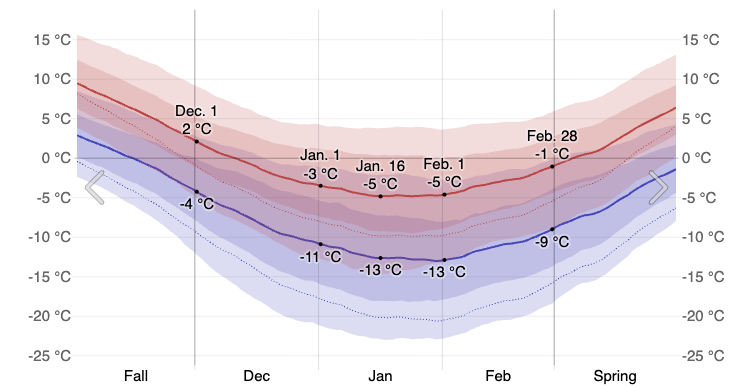
Regardless of neighborhood type, Montreal’s winter climate plays a critical role in pathway lighting design. Snowbanks, ice, and early darkness require fixtures that are durable, properly elevated, and engineered for cold-weather performance.
Nuage Lighting specifies fixtures that:
- Are rated for extreme cold temperatures
- Resist moisture intrusion and corrosion
- Maintain beam clarity even when partially surrounded by snow
In sloped neighborhoods, winter lighting is especially important for safety. In flat and dense areas, it improves visibility during peak evening hours when pedestrian activity is highest.
Choosing the Right Pathway Lighting Partner in Montreal
Effective pathway lighting is never one-size-fits-all. A professional lighting contractor must understand Montreal’s unique neighborhoods, architectural styles, and terrain challenges to design systems that perform reliably year-round.
Nuage Lighting designs and installs pathway lighting systems tailored to each environment, whether that means navigating Mount Royal’s slopes, enhancing suburban curb appeal, or integrating lighting into dense urban spaces.
If you are planning a pathway lighting project in Westmount, Outremont, Hampstead, TMR, the West Island, or central Montreal neighborhoods, working with a local specialist ensures the result is both functional and refined.
Contact us today to schedule a consultation where we can review your property's specific needs, discuss design options, and provide a personalized project estimate. To see what other local Montreal residents have to say about their experiences working with us, visit our Google Business Profile.
Frequently Asked Questions About Pathway Lighting in Montreal
How far apart should pathway lights be in sloped areas like Westmount and Outremont?
In sloped neighborhoods, fixtures are typically placed closer together than on flat ground to maintain consistent illumination and reduce shadowing. Exact spacing depends on grade, fixture output, and beam angle.
Are pathway lights allowed near public sidewalks in Montreal?
Yes, but they must comply with local regulations regarding glare, light trespass, and installation depth. A professional contractor ensures compliance.
Can pathway lighting be integrated into existing landscaping?
In most cases, yes. Professional installers like Nuage Lighting can retrofit lighting into mature landscapes with minimal disruption.
What color temperature is best for pathway lighting?
Warm white lighting is generally preferred across Montreal neighborhoods, as it improves visibility without harsh glare and complements both traditional and modern architecture.
Ready to elevate your exterior look to the next level? Book a call today and explore your options!